
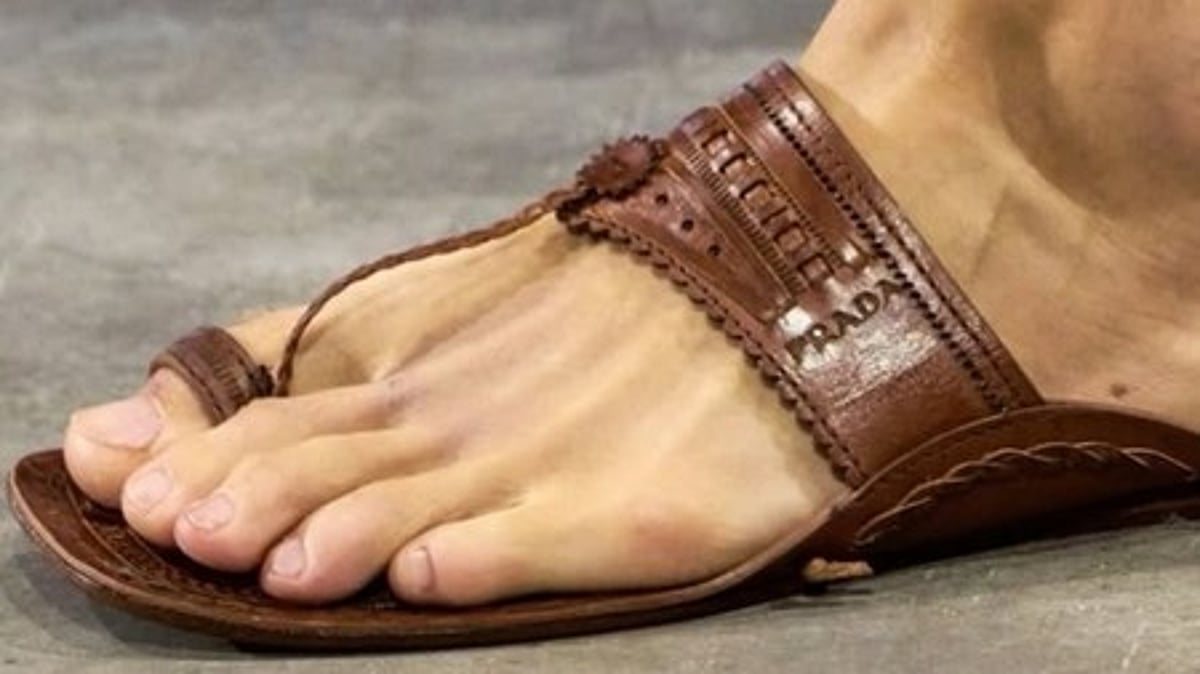
Why a ‘prada’ to add value to Kolhapuris?
The main problem is the minimal value addition. Most of the small sector units are ‘mule’ suppliers of basic leather for large producers abroad; or they manufacture shoe uppers for hundreds of Italian and American designer shoe brands. The dirty work is done by the tanneries in Kanpur and Tamil Nadu; the spoils are reaped by the Addidas’ and Reeboks.
The problem with the industry is its small, fragmented character, and its inability to modernize production and cater to fast-changing consumer taste. Most of the small units are in UP’s Kanpur, Agra and Saharanpur on the Ganga water system. In Tamil Nadu they are located in Chennai, Ambur, Ranipet and other hubs along the Palar river system. They generate huge waste, and are major pollutants. Lacking the resources to modernize, the industry faces civic action including forced relocation by municipal and environmental authorities.
That the total market capitalization of the top 8 listed Indian leather companies is only Rs 1,487 crore shows how fractionalized the Indian leather industry is. Just one of them, Bhartiya International Ltd, accounts for a market cap of Rs 1,142 crore. The rest are small entities.
Religious imagery
The protest against Prada is also a reminder of how clever business folk in the West have discovered great commercial potential in India’s ancient history and culture – from the erotic sculptures of the Khajuraho temples to the imposing images of elephant Lord Ganesh and Goddess Kali.
But often the use of mythological and religious imagery is culturally insensitive, and even boorish. No wonder there have been protests in recent years against Ganesh toilet seats, Kali underwear, Krishna bathmats, Om flip flops, and countless other images that many Hindus find disrespectful or offensive. It has gotten so bad that the Hindu American Foundation (HAF) has actually brought out a handbook of ‘Dos’ and ‘Don’ts’.