
What role does flux play in Flex pcb supplier?
flux play in Flex pcb supplier
In the intricate world of flexible printed circuit board (PCB) manufacturing, flux emerges as a critical component that facilitates the soldering process and ensures the quality, reliability, and performance of the final product. Flex PCB suppliers rely on flux to promote solder wetting, prevent oxidation, and improve solder joint integrity during assembly. Understanding the multifaceted role of flux is essential for achieving optimal soldering results and meeting the stringent requirements of modern electronic applications.
One of the primary functions of flux in flex pcb supplier is to facilitate solder wetting, which refers to the ability of molten solder to spread and adhere to the surfaces of the substrate and component leads. Flux lowers the surface tension of the solder, allowing it to flow more freely and form a uniform bond with the metallized surfaces. This promotes intimate contact between the solder and the substrate, ensuring robust and reliable solder joints that exhibit excellent electrical and mechanical properties.
Moreover, flux plays a crucial role in preventing oxidation and surface contamination during the soldering process. As solder is exposed to elevated temperatures, it can react with oxygen in the atmosphere, forming oxide layers that inhibit wetting and compromise solder joint integrity. Flux acts as a chemical agent that removes oxides and other surface contaminants, allowing the solder to bond effectively with the substrate and component leads. By promoting clean, oxide-free surfaces, flux ensures the formation of high-quality solder joints with superior electrical conductivity and mechanical strength.
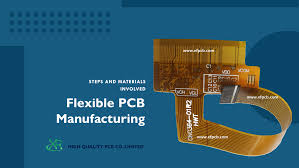
What role does flux play in Flex pcb supplier?
Additionally, flux serves as a thermal barrier that protects sensitive components and substrates from thermal damage during soldering. Flexible PCBs are often constructed from materials with low melting points, such as polyimide or polyester, which can be susceptible to heat-induced deformation or delamination if exposed to excessive temperatures. Flux helps to dissipate heat and control the soldering process, preventing overheating and minimizing thermal stress on the substrate and components. This is particularly important in flex PCB assembly, where delicate substrates and miniature components require precise temperature control to prevent damage.
Furthermore, flux facilitates the removal of solder residues and flux residues after soldering, ensuring the cleanliness and reliability of the assembled PCB. Flux residues left behind after soldering can attract moisture, cause corrosion, and compromise electrical insulation, leading to reliability issues and performance degradation over time. Flux formulations are designed to be easily removed through cleaning processes, such as solvent cleaning, aqueous cleaning, or vapor phase cleaning, leaving behind a clean, residue-free surface that enhances the longevity and reliability of the PCB.
Moreover, flux plays a vital role in controlling solder joint formation and minimizing defects such as solder bridging, tombstoning, or solder balling. Flux formulations are optimized to promote proper solder flow and wetting, preventing solder from flowing into unintended areas or forming undesirable shapes. By controlling the rheological properties of the solder paste and the surface tension of the molten solder, flux ensures that solder joints are formed accurately and consistently, minimizing the need for rework and enhancing production efficiency.
In conclusion, flux is a indispensable component in the flex PCB supplier process, where it facilitates solder wetting, prevents oxidation, protects against thermal damage, promotes cleanliness, and controls solder joint formation. By leveraging flux formulations optimized for flex PCB assembly, suppliers can achieve reliable, high-quality solder joints that meet the stringent requirements of modern electronic applications. Through careful selection and application of flux, flex PCB suppliers can enhance the performance, reliability, and longevity of their products, ensuring customer satisfaction and driving innovation in the flexible electronics industry.