
How is PCB flex rigid used in military applications?
PCB flex rigid used in military applications
Rigid flex PCBs are becoming increasingly popular for use in military applications. They allow for the integration of rigid layers with flexible ones and can withstand a variety of extreme conditions, such as vibrations, moisture, dust and rapid temperature changes. They also have greater reliability compared to traditional rigid circuit boards due to fewer points of failure.
In addition, they can also save on material costs and weight. These factors are especially important for high-reliability and military applications where small size, a lightweight design, and durability are essential. Rigid-flex boards are used in many industries, including medical (pacemakers and handheld monitors), defense (weapons guidance systems and communication equipment) and aerospace. They are also found in small consumer products, such as portable MP3 players and digital cameras.
Using a hatched ground (rather than a solid one) can help reduce stress on the board and increase its flexibility. This is because a hatched ground has a different current flow than a solid ground and can avoid the stress-induced cracking that can occur in pcb flex rigid when they are bent.
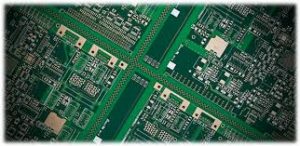
How is PCB flex rigid used in military applications?
Another advantage of a hatched ground is that it can be routed under the traces of concern to provide more isolation and better impedance control. However, this is not suitable for routing high-speed signals because it will interfere with the signal’s amplitude. For these situations, it is best to route the return traces directly under the trace of concern.
The rigid-flex PCB manufacturing process involves lamination, which is the process of assembling the layers together by applying heat and pressure to them. It’s important to ensure the layers are secured without voids or spaces, as this will impact the quality of the final product. It’s also crucial to have a thorough inspection process, as defects or mistakes in the manufacturing process can lead to poor performance or even failure of the final product.
When creating a flex PCB, it is recommended to use lower layer counts than those typically used for rigid PCBs. This is because higher layer counts can make it more difficult to maintain flexibility. Also, it’s best to route traces perpendicular to the bend line (the axis that the flex PCB will be bent around) to eliminate stress points and reduce failure.
While the initial manufacturing cost of flex-rigid PCBs may be higher, they often prove cost-effective in the long run. The reduced need for connectors, cables, and assembly labor, combined with increased reliability, can lower the total cost of ownership.
PCB flex rigid is an extremely versatile and reliable solution for military, aerospace and other high-reliability applications. When paired with the right design and manufacturing processes, it can deliver high-performance electronics that meet exacting standards. To learn more about how this technology can benefit your business, contact us today. We can help you determine whether a pcb flex rigid is the best option for your specific application and answer any other questions you may have. We look forward to working with you!