
What industries commonly use flexible circuit boards?
use flexible circuit boards
A flexible printed circuit board is a type of electronic circuit that can bend or flex, which makes it ideal for devices that will experience movement or vibration during use. This type of circuit board can also help reduce weight and space requirements in the device.
flexible circuit board are used in a wide variety of industries, including aerospace and defense applications, medical equipment and automotive electronics. The most common industry for this type of circuit board is computer technology, as the flexibility allows them to fit more computing power into handheld and mobile devices while reducing their overall size. They are also widely used in consumer electronics like smartphones, tablets and laptops.
Rigid flex PCBs are another common application, as they can be used in industries where both flexibility and structural integrity are needed. For example, these circuit boards are used in aerospace and military equipment, automotive electronics and medical devices like implants. Rigid flex PCBs are often laminated with stiffener material, which acts as an insulator and doesn’t allow signal transfer, to keep the board rigid in areas that will experience high levels of vibration or stress.
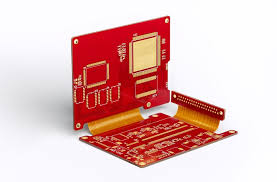
What industries commonly use flexible circuit boards?
These circuit boards are manufactured using a thin substrate, usually made from polyester or polyimide film that is bonded with copper through etching and then covered with a coverlay to protect the copper from moisture and dirt. The coverlay is typically applied to the PCB prior to assembly and soldering, using pressure-sensitive adhesives, which can be removed after a product is finished.
The primary benefit of a flex circuit board is its ability to withstand vibrations and other stresses in harsh environments. This can reduce the number of connections that need to be made and thus minimize the risk of failure. In addition, a flex circuit can provide improved electromagnetic interference (EMI) shielding, which can be crucial in applications that will interact with other electronic components.
A flex circuit is also an excellent choice in applications that require a high level of reliability. Unlike traditional connectors, which are susceptible to mechanical wear and tear, a flex circuit can eliminate them, resulting in a more durable and reliable design that will last longer. Additionally, the reduced number of connections can result in less oxidation and a reduction in the amount of electrical current that is transferred through the connections.
In addition to these benefits, a flex circuit can be easily customized for specific applications. This includes adding components, such as LEDs or LCDs, to display data or user interfaces. It can also include graphic overlays, which are acrylic or polyester covers that provide a way for users to interact with the circuit board and its functions.
A final advantage of a flexible circuit board is that it may reduce the number of wiring errors during production, saving time and money. These advantages are especially important in industries that require more complex products and higher production volumes, such as aerospace applications or drones.